CIID · Tangible User Interfaces · 2025
Temp Mediator
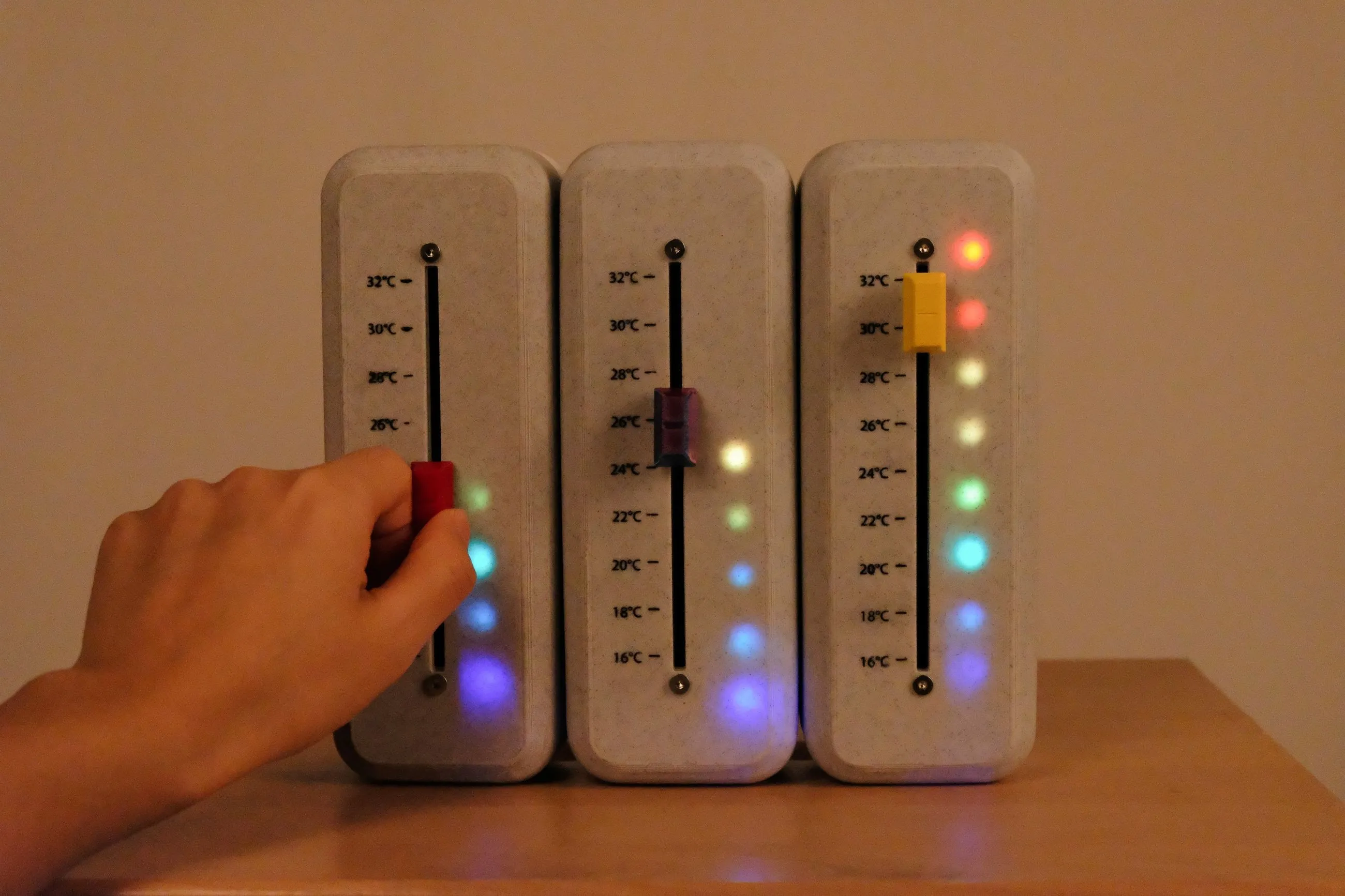
Linked thermostats that help flatmates settle on one temperature everyone can live with.
The short version
About 1 minute
- Situation
- The brief was to design a product that builds community, for an imaginary client, IKEA.
- Problem
- Flatmates disagree about room temperature, usually silently. Research showed that thermostat disputes, unlike most roommate conflicts, are measurable, which makes them something technology can help with.
- What made it hard
- Several devices had to talk to each other without depending on home Wi-Fi.
- The system had to be fair, and visibly so, or people wouldn't trust it.
- My role
A two-person project with Dishank Gandhi. I did some of the coding, 3D printed the enclosures, ran user testing and made the video.
With Dishank Gandhi
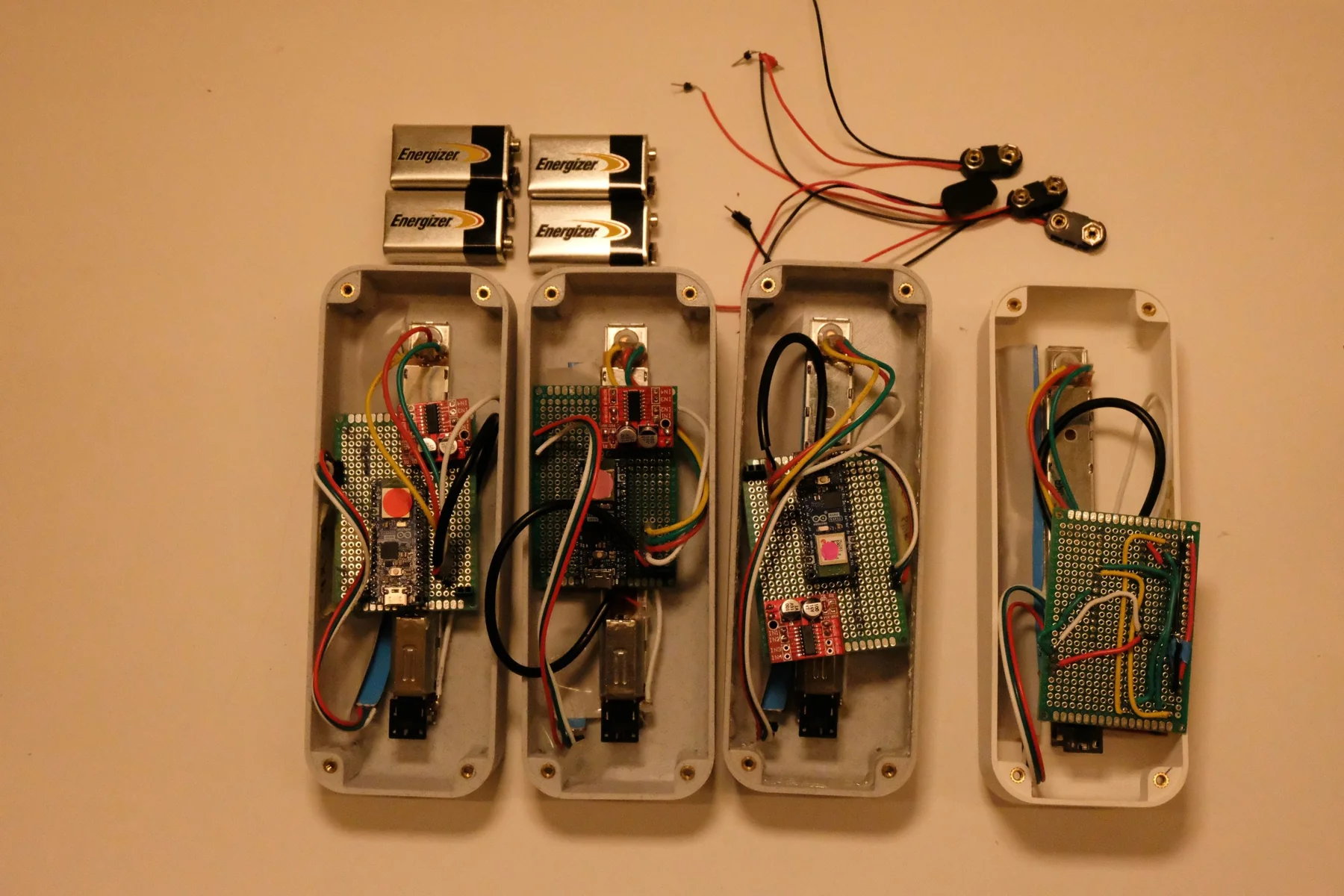
Tools: ESP32, ESP-NOW, custom PCBs, 3D printing
- Key decisions
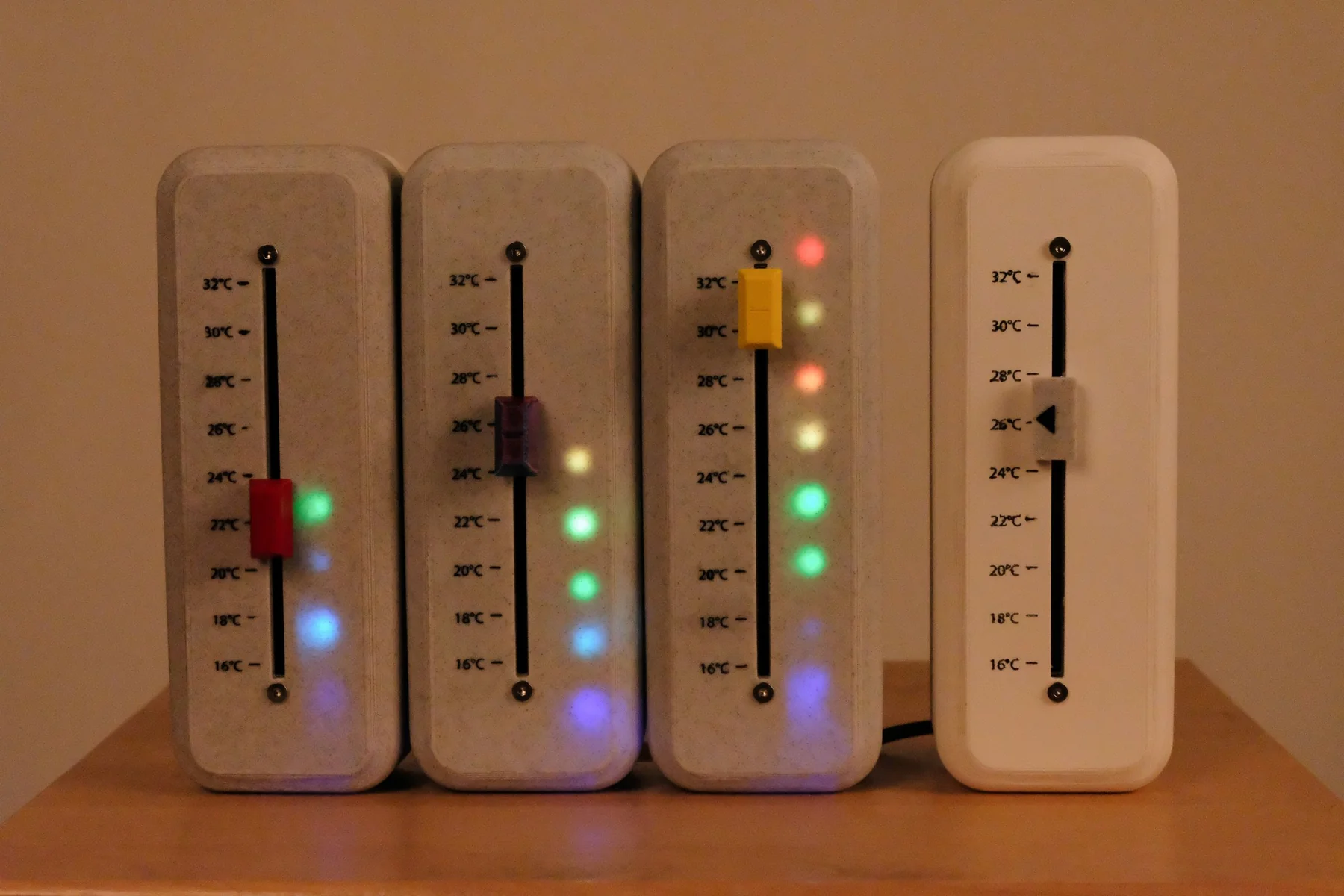
- Each room gets its own fader, modelled on DJ console controls, so it needs no explanation.
- The devices form their own low-power wireless mesh over ESP-NOW and agree on a temperature through a weighted average.
- Haptic resistance in the fader physically shows where the group's consensus lies.
- Outcome
- A working set of connected devices, built with four custom PCBs and 3D-printed parts. Testing showed that seeing other people's preferences makes people moderate their own.
Details
Each device sits in a room. Moving its fader sends the change across the network in real time, and every device recalculates a temperature that balances everyone’s preference.
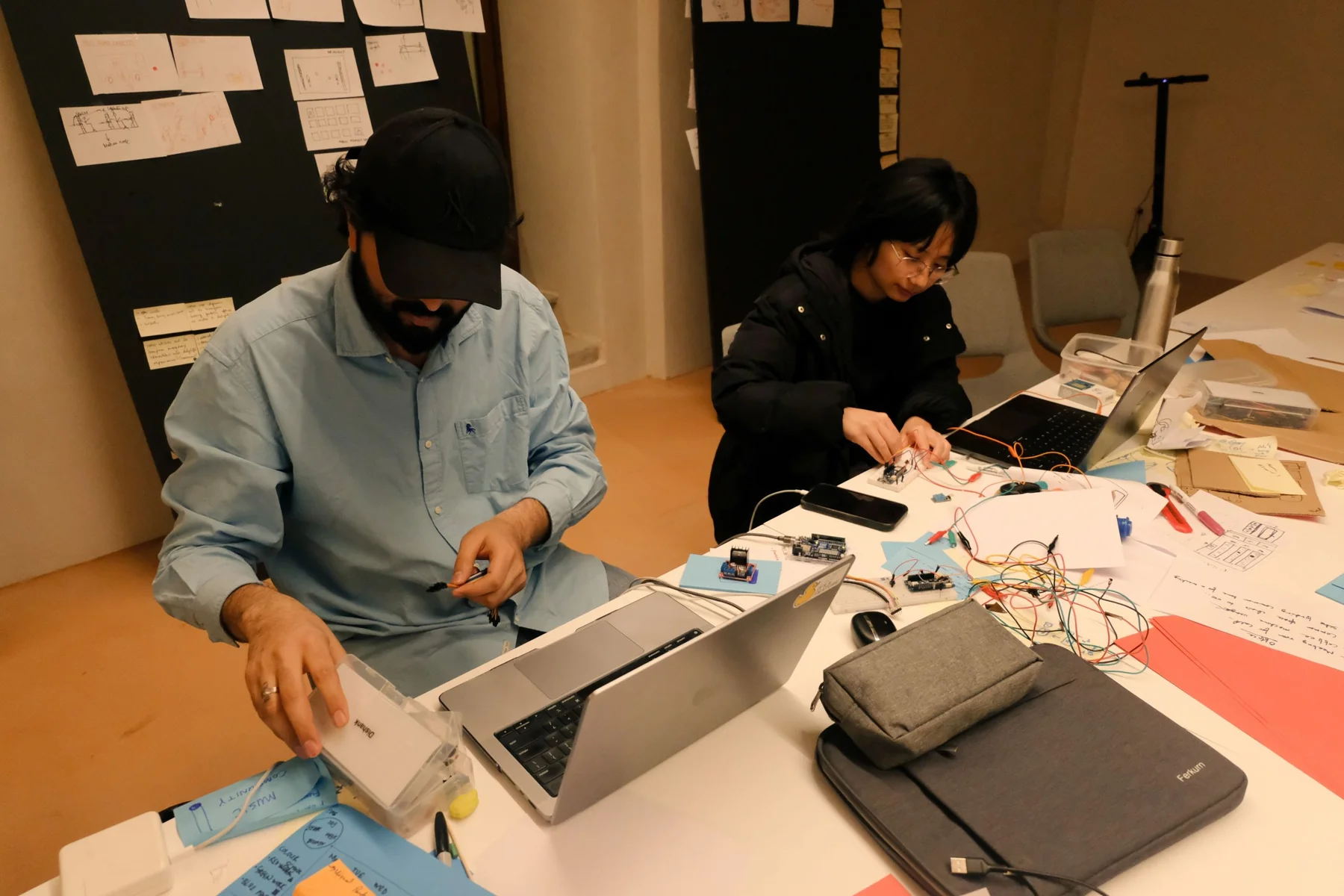
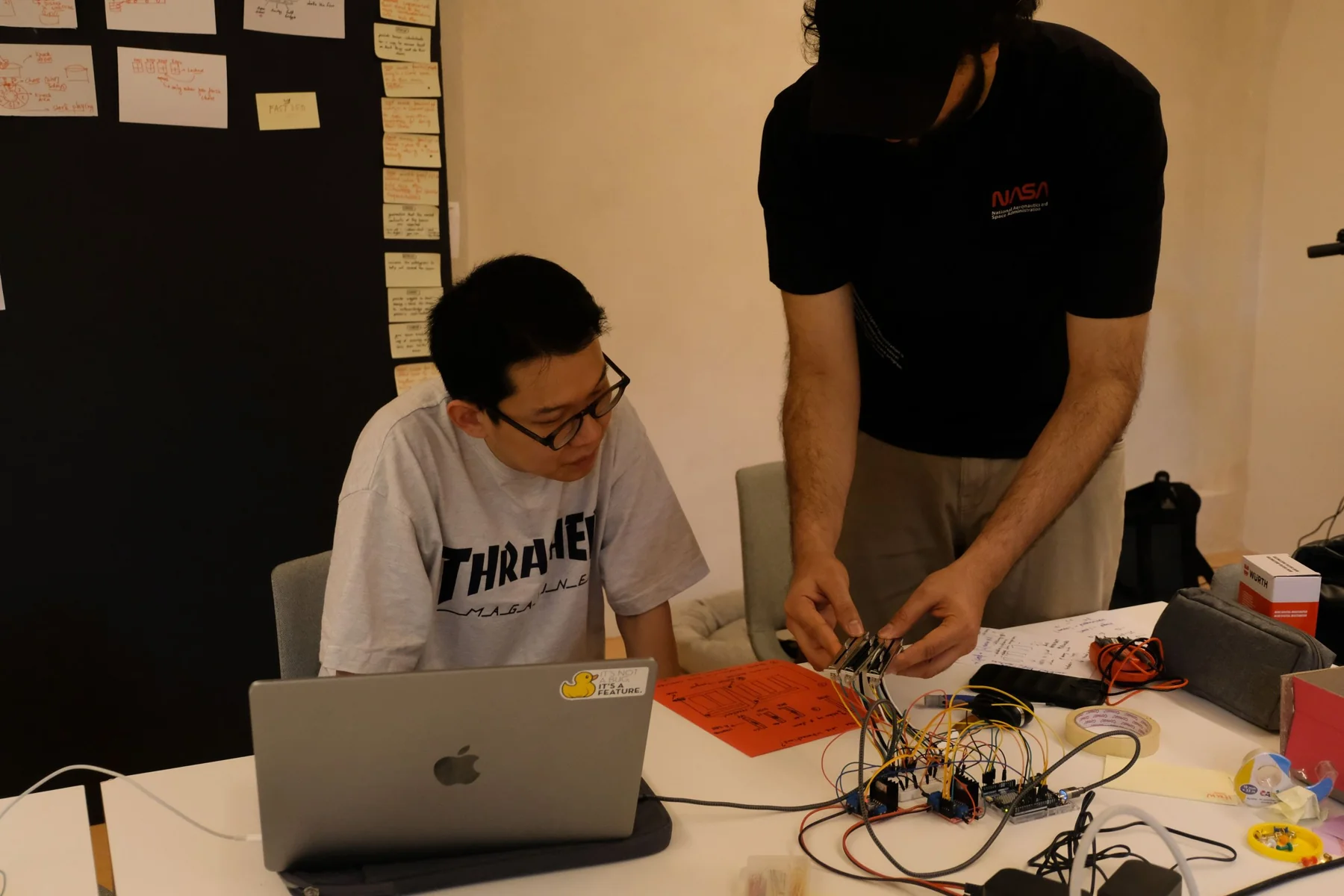
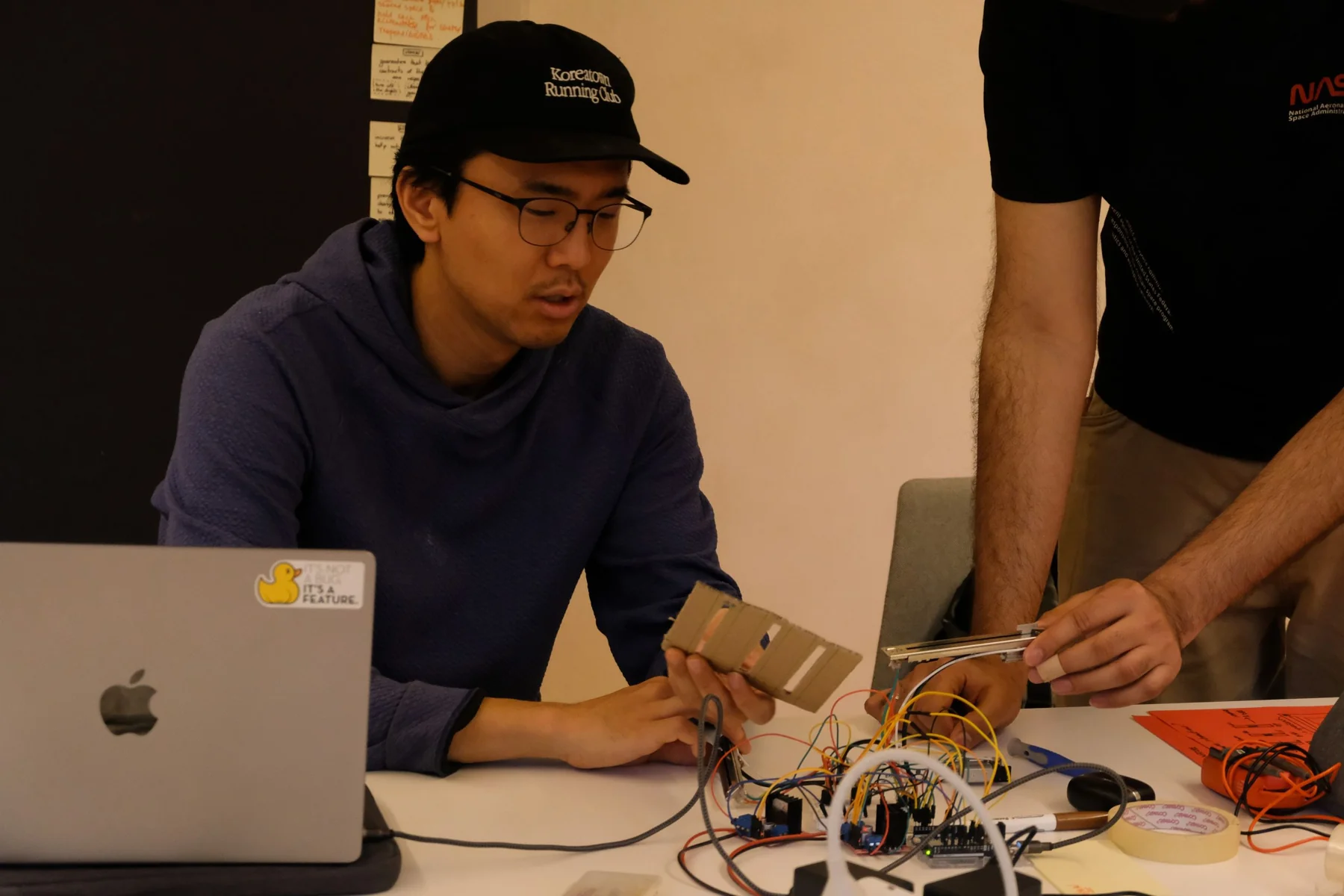
Building it
What we learned
- Transparent algorithms build trust and make people more willing to use the system.
- Seeing others’ needs changes behaviour: people moderated their preferences.
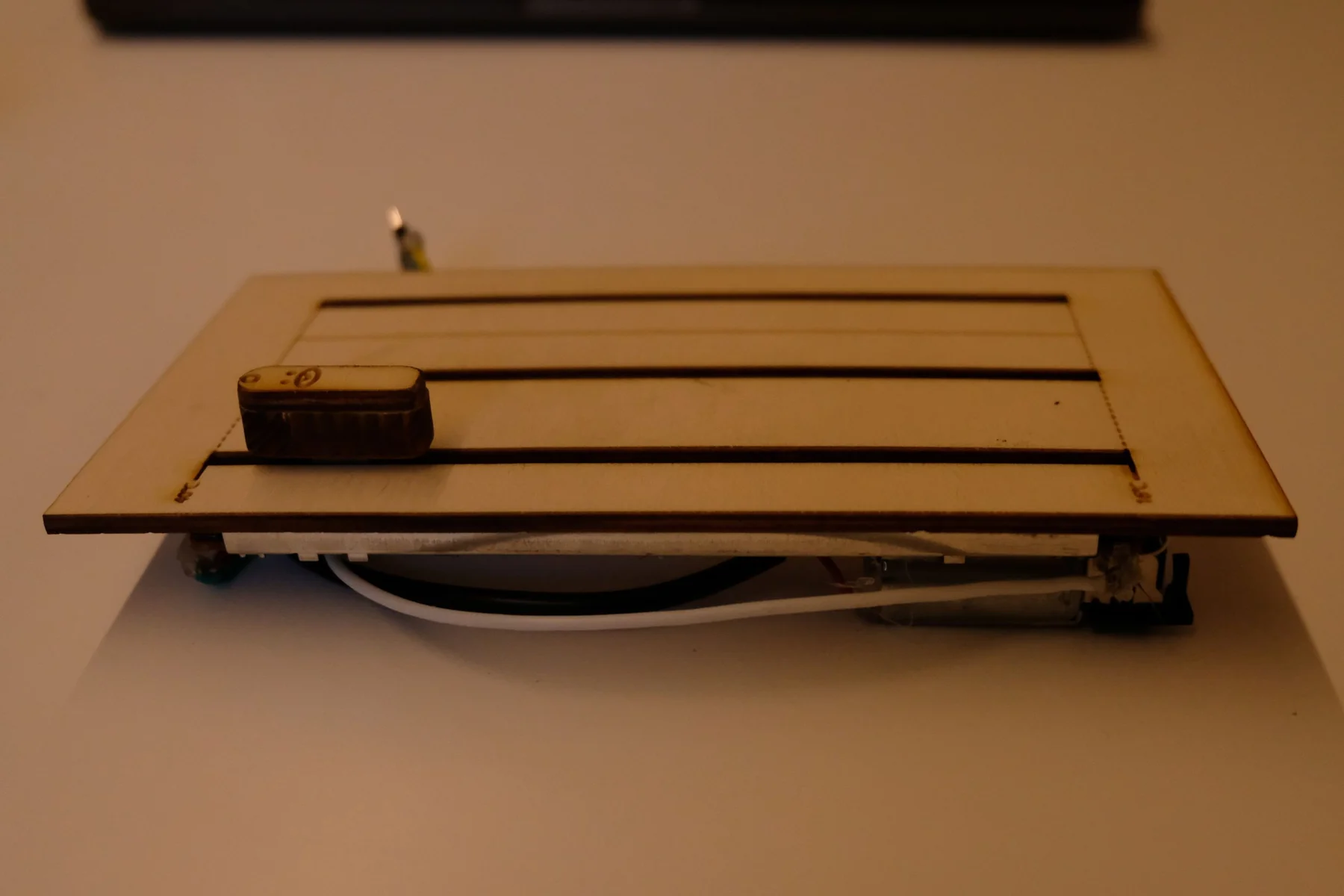
- Hardware is hard. Building four custom PCBs and 3D-printed enclosures gave us new respect for consumer electronics.
- People adjust their preferences less often than we expected.
- Testing surfaced feature ideas such as a vacation mode for absent flatmates and a simple off switch.