CIID thesis · 2025
Heritage Remix
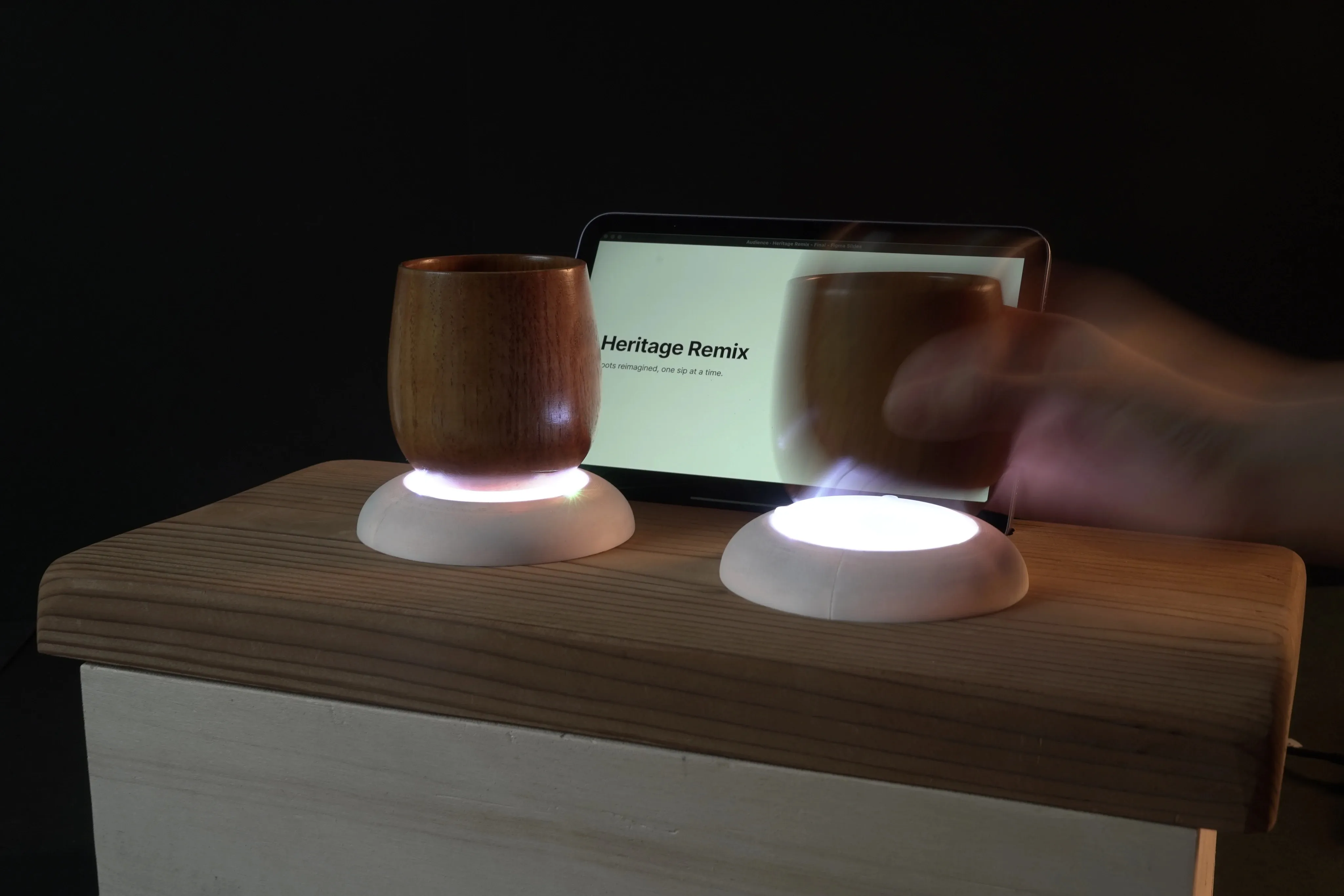
A ritual vessel that brings the Apatani diaspora living away from home together over a monthly shared drink.

The short version
About 2 minutes
- Situation
- The Apatani are a small indigenous community in Ziro, Arunachal Pradesh. Many younger Apatani now live away for study or work, and the rituals, artefacts and language that tied them to home are slipping into nostalgia.
- Problem
- How might the Apatani diaspora reweave traditional rituals and artefacts into today's lifestyles, so that rituals, artefacts and language carry on?
- Why it mattered
- Interviews showed the three are linked. As rituals are performed less, the artefacts used in them go unused, and the words and phrases spoken during them disappear too.
- What made it hard
- Being from the community doesn't give me licence to change its traditions as I please.
- Many rituals are tied to animist and sacrificial practices, and many Apatani have since changed religion.
- Heritage is broad. Choosing which part to work with, and at what level, was its own problem.
- A tech-driven ritual risks being a one-off novelty that nobody returns to.
- My role
Individual thesis project. I ran the research and co-creation sessions, prototyped the vessels, platform and software in Arduino and Processing, tested with community members, and made the concept video.
With Grishma Rao (advisor), Chris Downs (advisor), Jose Chavarria (advisor)
Tools: Arduino, Processing, laser cutter, Premiere Pro, Lightroom Classic
- Key decisions
- Anchored the ritual in the Myokó festival, specifically Ajin Buñn, the custom of inviting ancestral friends. Parts of Myokó have changed with the times, but its core value of friendship is still alive, which showed that the culture evolves rather than stays fixed.
- Chose to remix the ritual for today rather than replay it faithfully.
- Made the vessel itself the artefact, after testing a wearable that could turn any object ritual.
- Moved from a yearly festival to a monthly rhythm, with a reminder on the 19th and a shared drink on the 20th.
- Pivoted the stories from any story to stories of Apatani origins, inspired by Ayyu, a fading tradition of sung oral literature.
- Outcome
- Heritage Remix was nominated for the UX Design Awards 2026 in the New Talent category. In testing, community members responded with concern for the current state of their traditions and hope for ways to keep them going, which overturned my assumption that younger Apatani didn't care.
Full case study
Context
Heritage isn’t only monuments or artefacts. It’s identity, memory and the knowledge a community carries. When indigenous heritage is lost, the loss isn’t only local. Heritage Remix mixes old traditions with new ideas so a culture can keep living and changing.
Where history lives, wellness thrives
Cultural heritage connects us to our ancestors and helps us understand who we are. Research suggests living near historic places can improve our health, happiness, and connections with others. Heritage also inspires people to create art and share cultures, helping us respect and understand each other better.
Apatani, my tribe
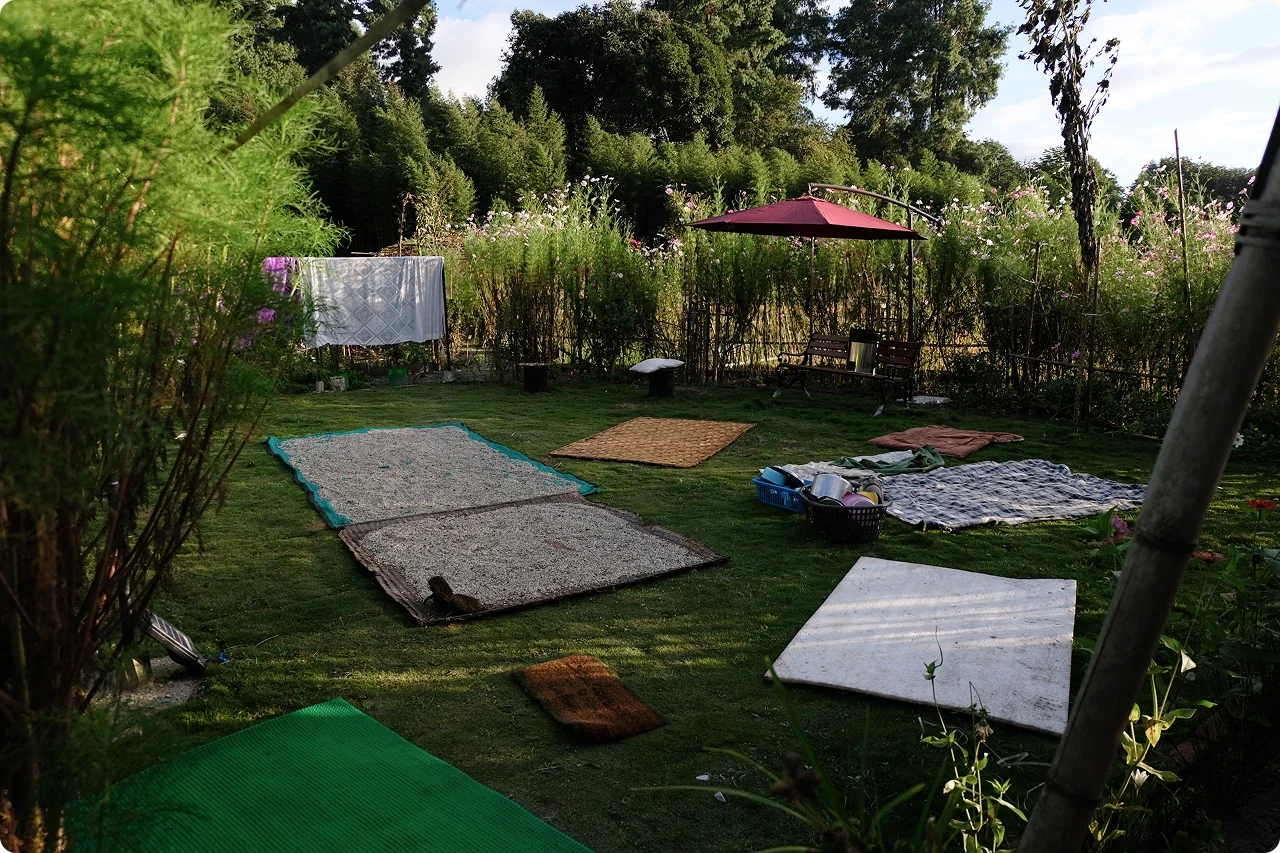
I come from the Apatani, one of the indigenous tribes of Northeast India. The community is small. We lived largely apart from the modern world until the early 1940s, when the Indian government began its expeditions to the area. Life was slow but full; there wasn’t much to do for fun, and people found joy in small things.
Modern life, and a widening gap
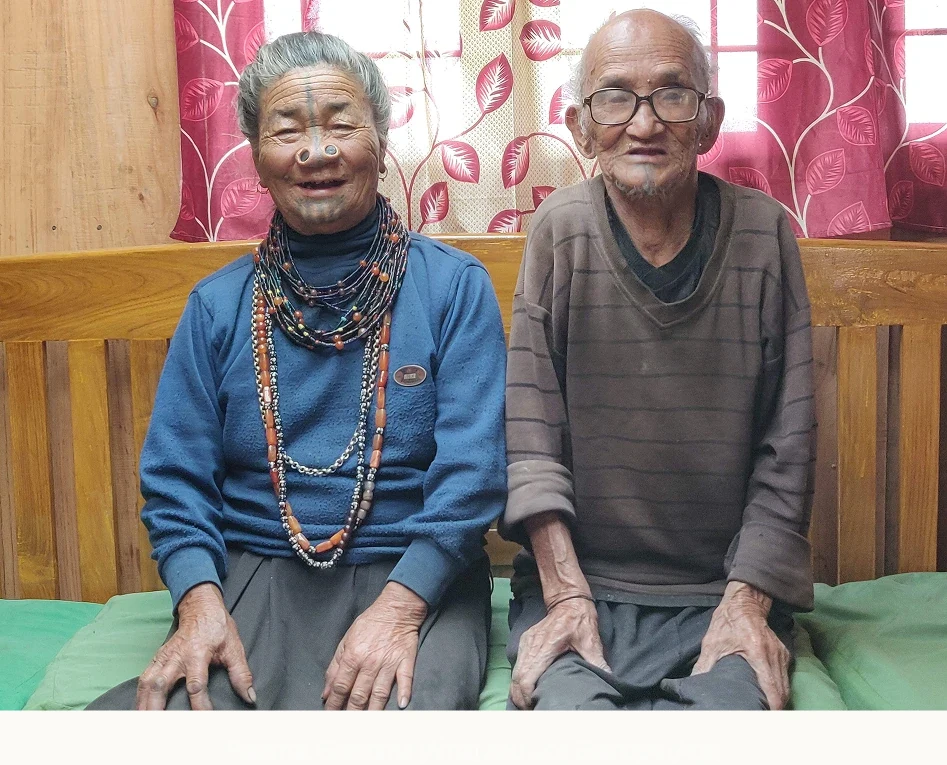
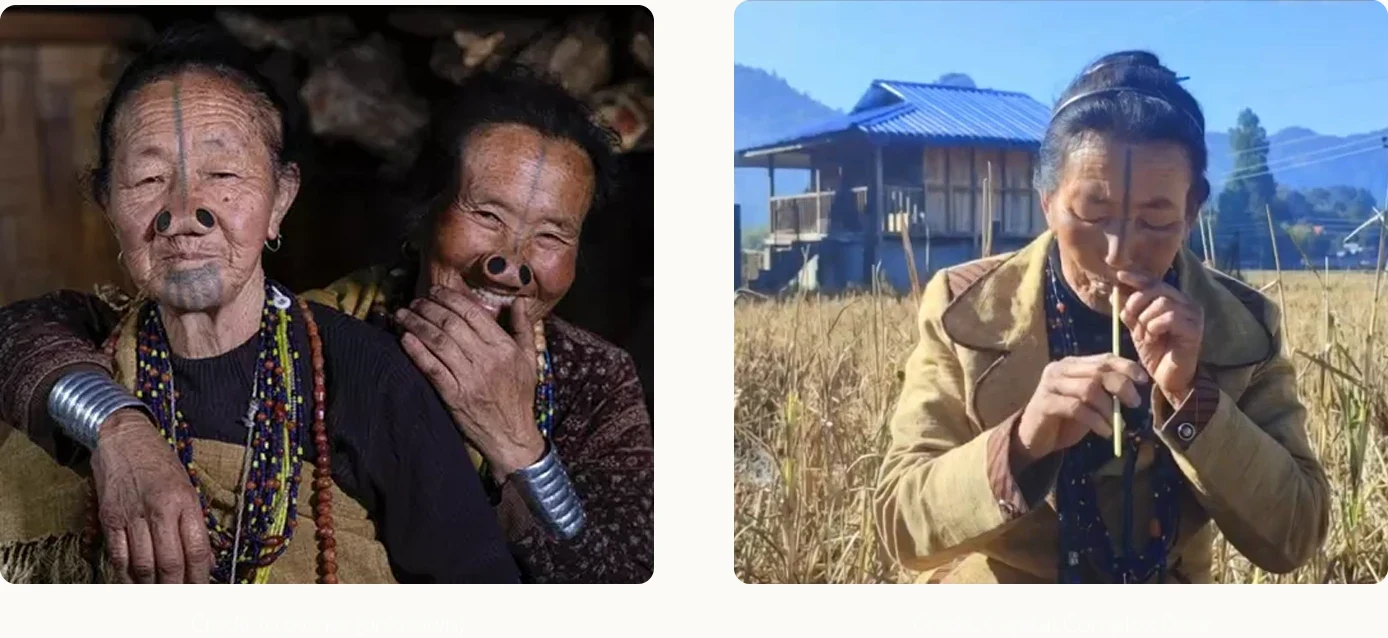
Ziro has changed a great deal in a short time. Facial tattoos and nose plugs were banned in the 1970s to combat discrimination. Instruments like the Ellu, a wind instrument made from the stem of the rice plant, are rarely played. Many people moved away from our animist beliefs, and technology arrived fast.
For the Apatani, rituals bring families and villages together to deal with problems. With these changes, we are slowly growing apart.
Rooted, and still losing touch
Many of us remember sitting with our last tattooed grandparents, watching them prepare ritual offerings, hearing stories in our mother tongue, admiring the hand-carved bamboo mugs they drank from, or helping in the rice fields. When we leave for education or work, those people, places, ceremonies and even the language start to become nostalgia instead of continuity. Ancestral knowledge is rarely recorded, so there’s often nowhere to look for answers.
“Coming back to Ziro, I had identity crisis. What was familiar to me was what people were speaking to me in, that was my language. Learning the language really opened the doors for me.
Even the elders I speak to in Tanii, they feel seen, they feel heard. If the language is lost, the bridge is broken. Hence youngsters should learn Apatani.”
Indigenous poet, multidisciplinary artist and writer
These conversations and my personal experiences led me to ponder…
How might we help the Apatani diaspora reweave traditional rituals and artefacts for today's lifestyles, so the rituals, artefacts and their language thrive for future generations?
The ritual
Heritage Remix is a contemporary ritual inspired by the Apatani Myokó festival, a celebration of harmony between the spiritual and human worlds. It uses technology to bring Apatani diaspora together, learn about our history, and start conversations, wherever people live.
This is my interpretation of the ritual. The emotional core is the same, but the mechanics are updated to be more accessible to the people taking part.
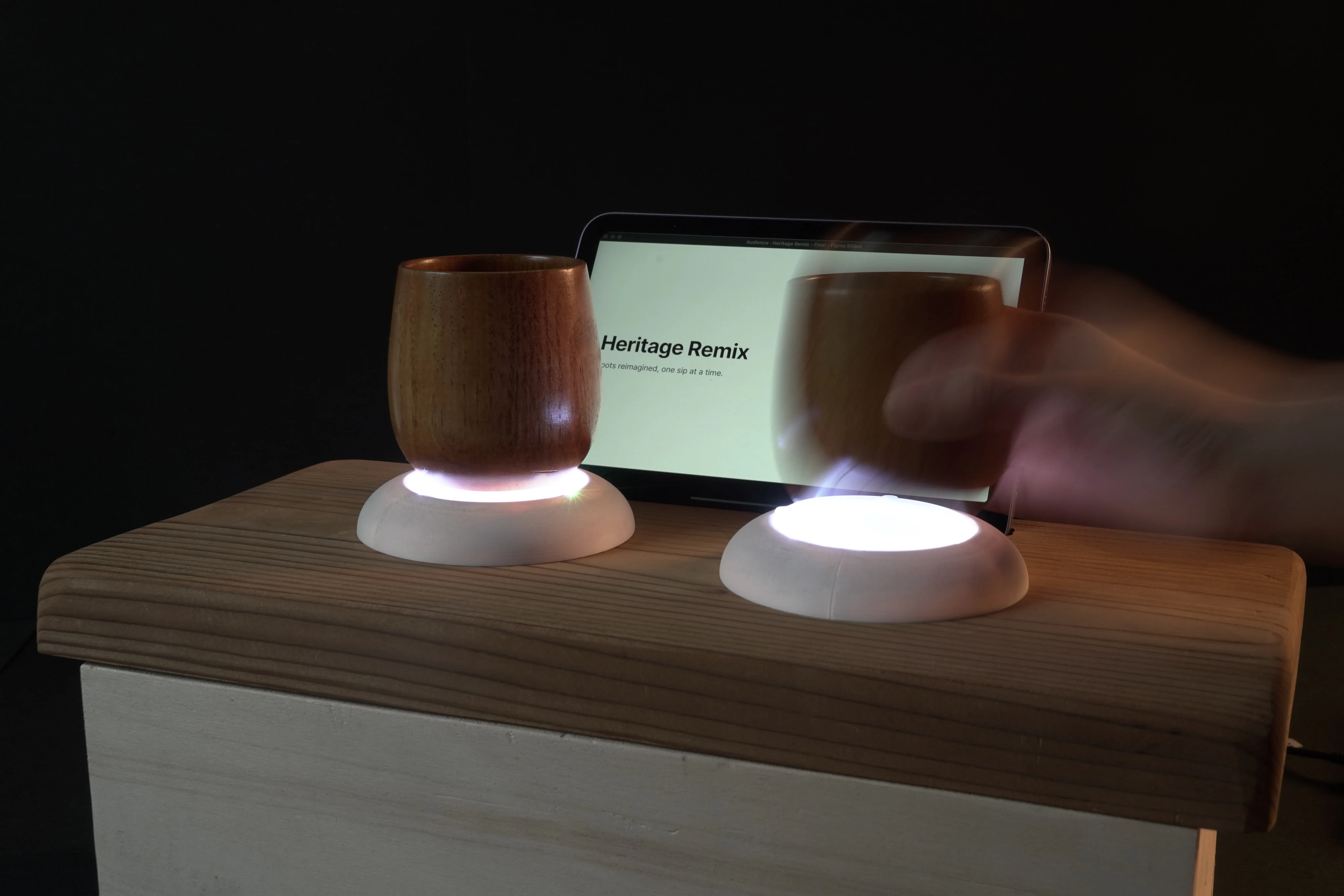
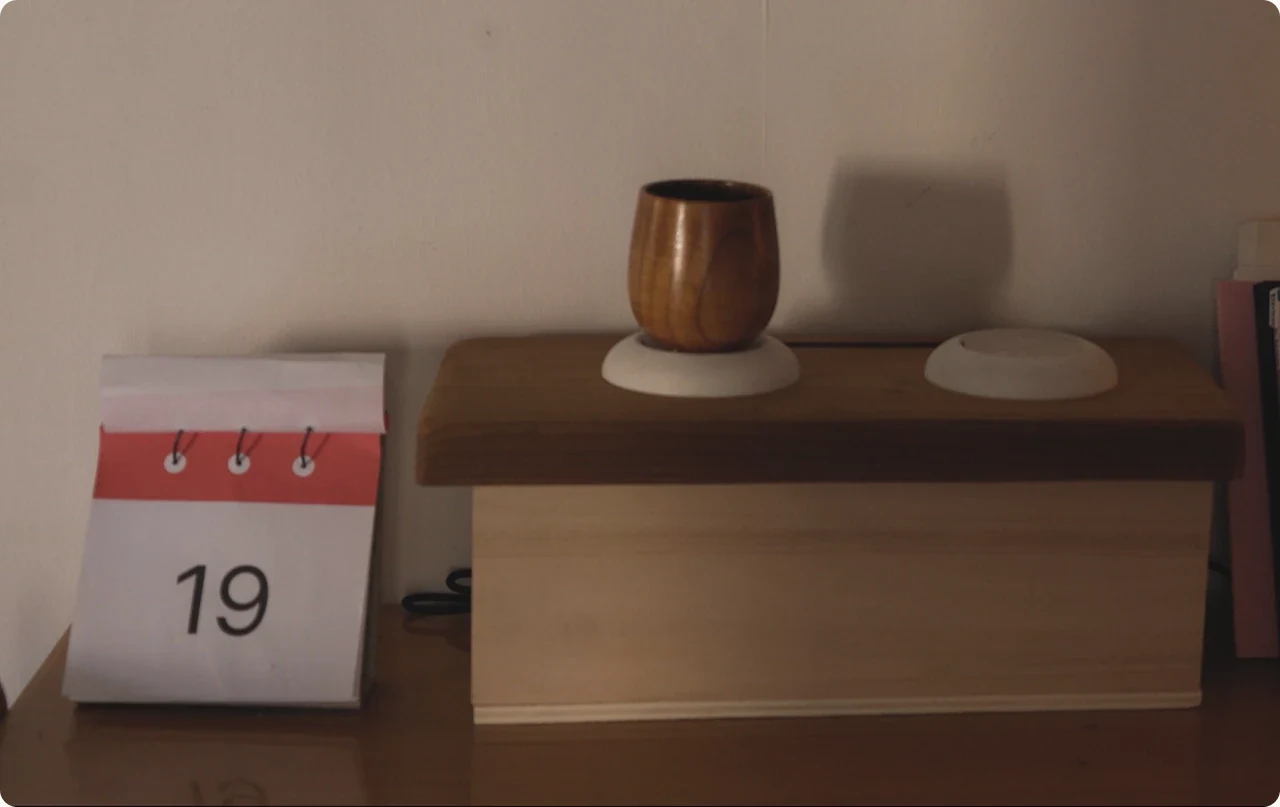
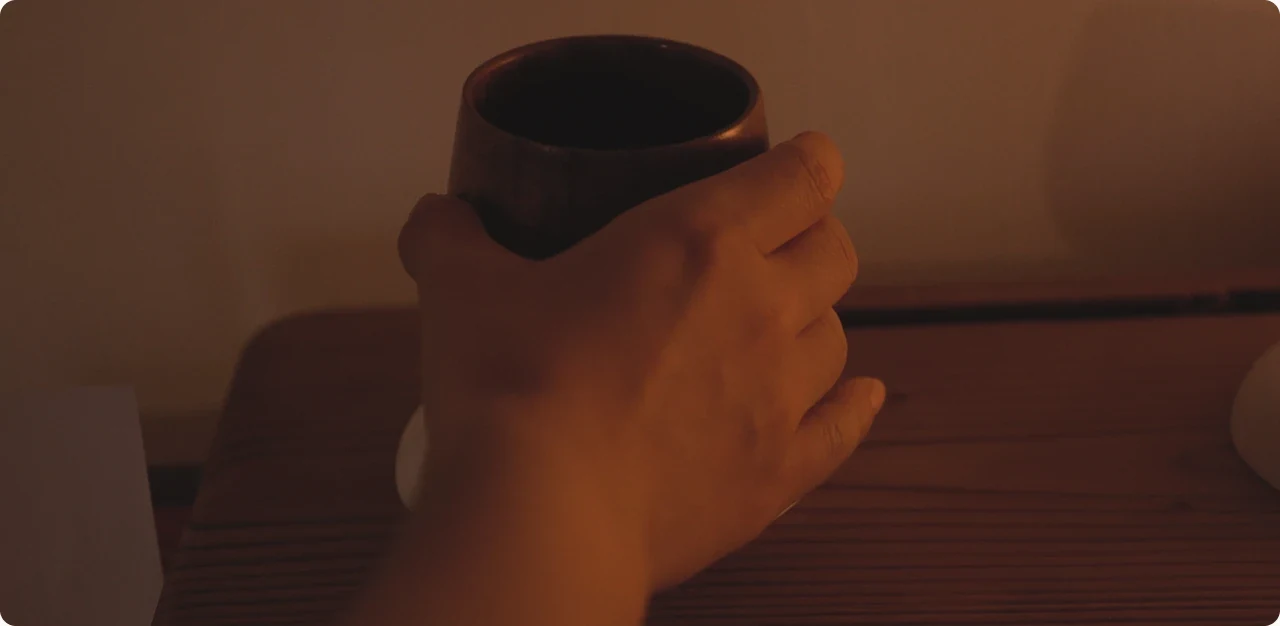
Instead of once a year, it happens every month. On the 19th the vessel gently vibrates; lifting it reveals a message that the ritual day is near and that Aba, our ancestor’s spirit, is coming to bless us.
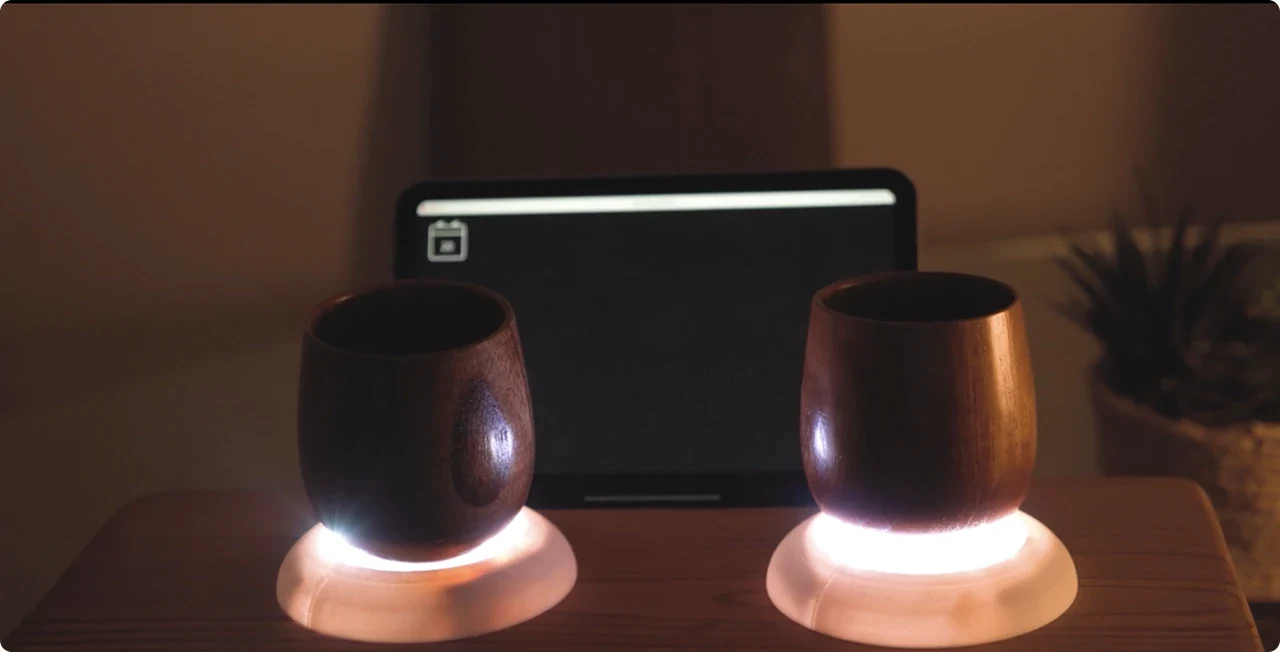
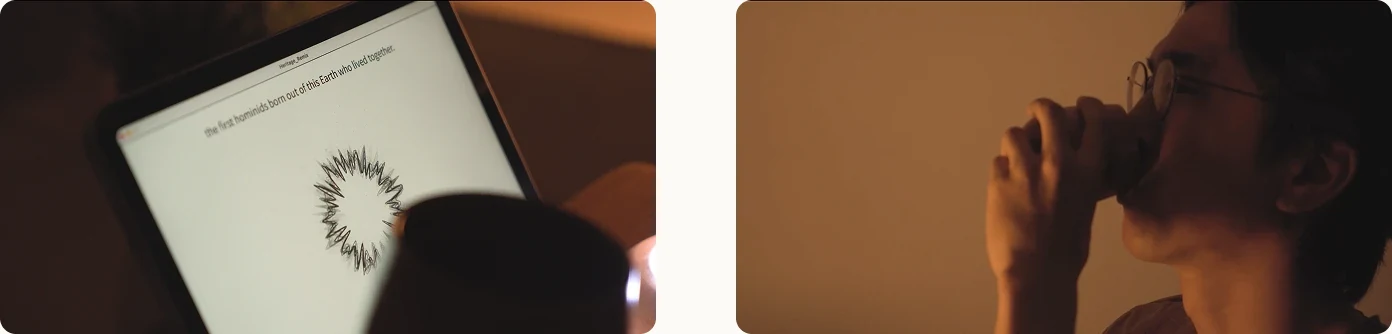
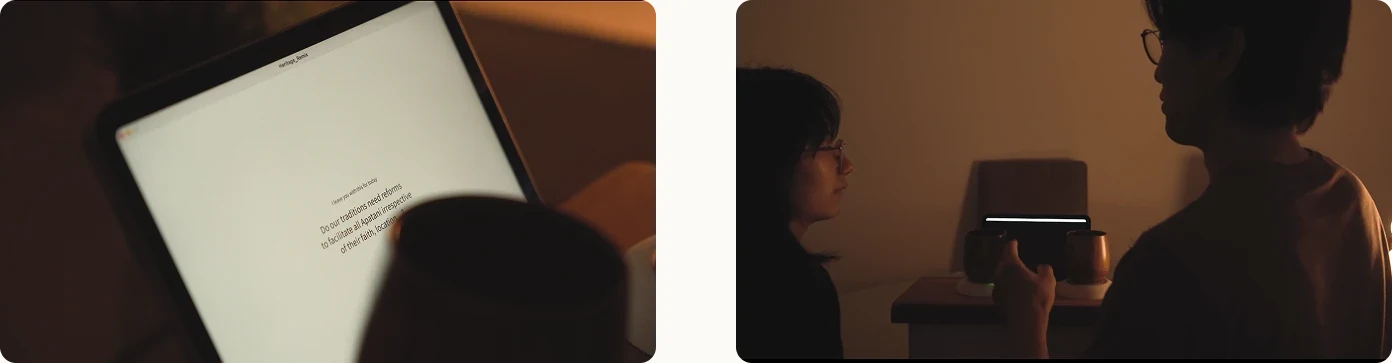
On the 20th, an ancestral voice invites the participant to share a meal with a friend. Placing both vessels on the platform acknowledges the presence of two souls and links them. A story of the past begins, pausing with each sip. When the drinks and the story are finished, a blessing invites quiet reflection.
Inspirations from the past
I drew from original artefacts and practices, and picked an element from each.
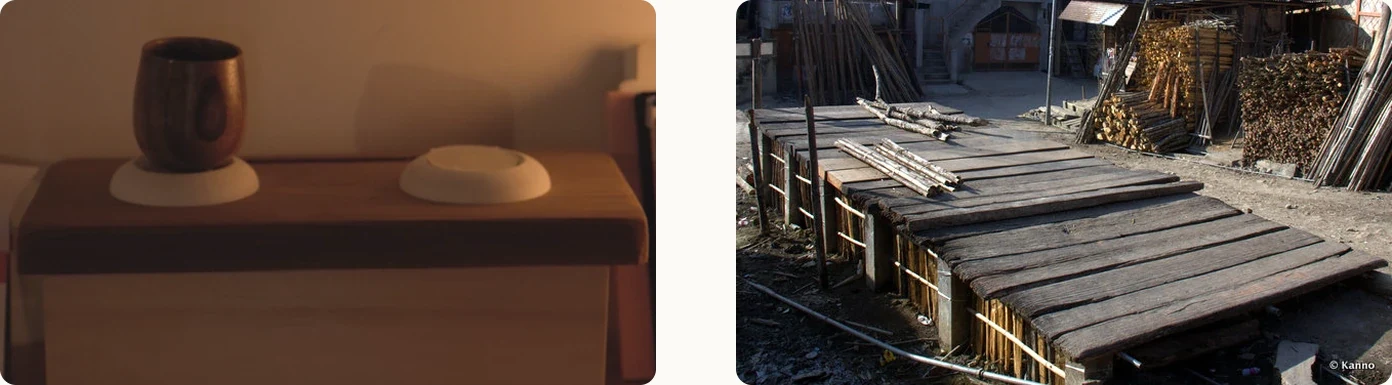
The wooden base stands for the Lapan, the sacred central platform where the Apatani gather for rituals, village meetings and ceremonies.
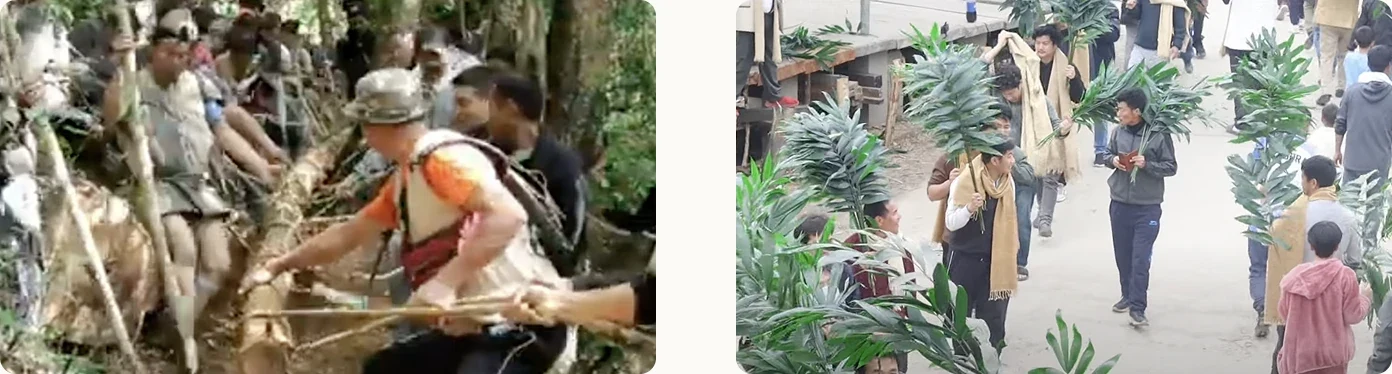
The vibration and message on the 19th echo Myokó’s preparatory phase, which starts as early as October, when community members remind each other to prepare. The message stands for people passing the word along, and the vibration for the movement of the men, who march with Tapr leaves after a successful monkey hunt to signal the move into the preparatory phase.
The white light recalls the days when the ancestral spirit comes to the Nago, a small hut, under the moonlight.
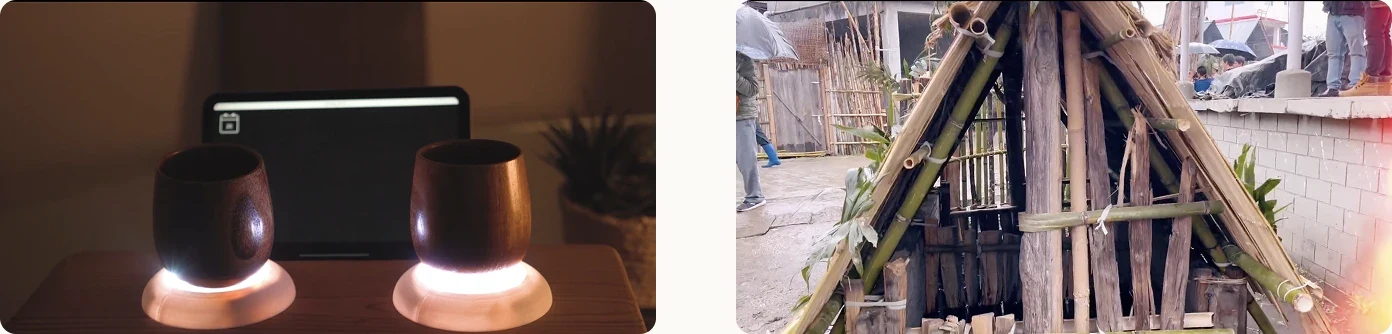
The ambience of the drinking moment is set to create a sense of bonding.
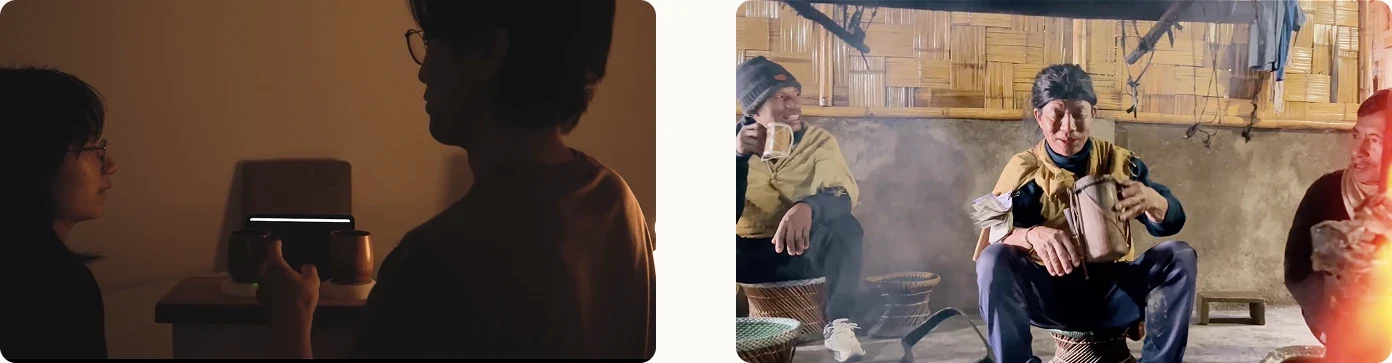
The ancestral voice represents Abotani, whom we believe to be our forefather, shown as a formless presence. English text helps people learn and understand the language.
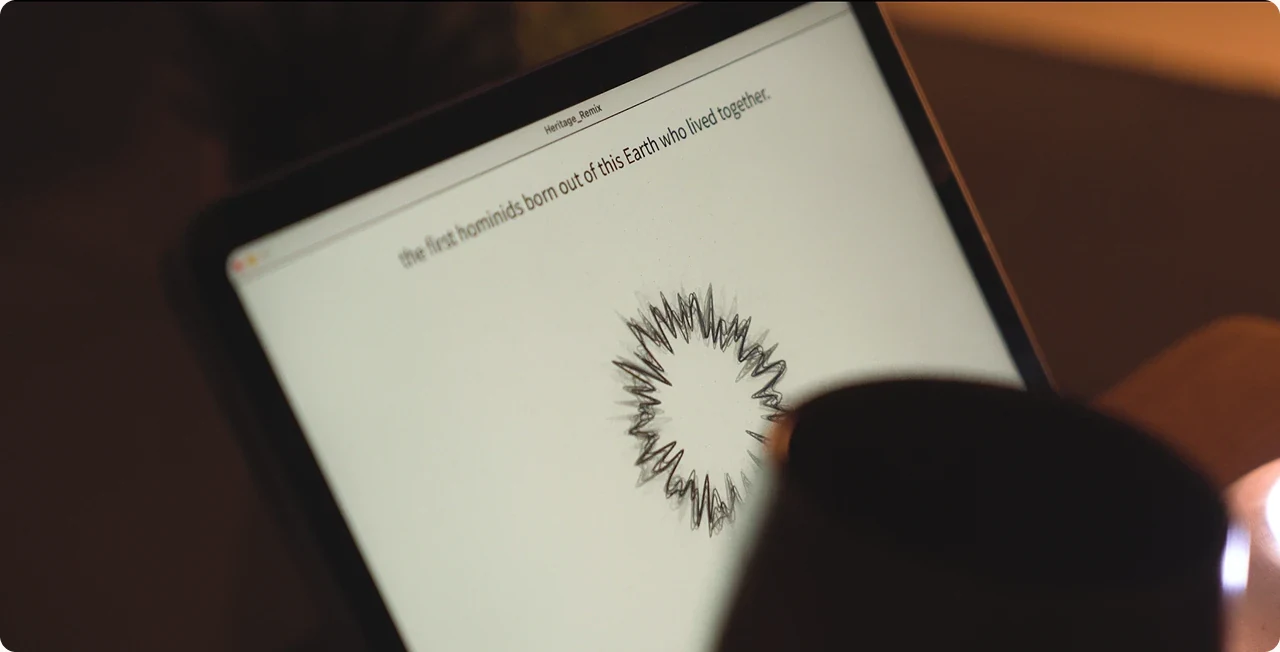
The pause with each sip suggests the spirit is present and drinking with us.
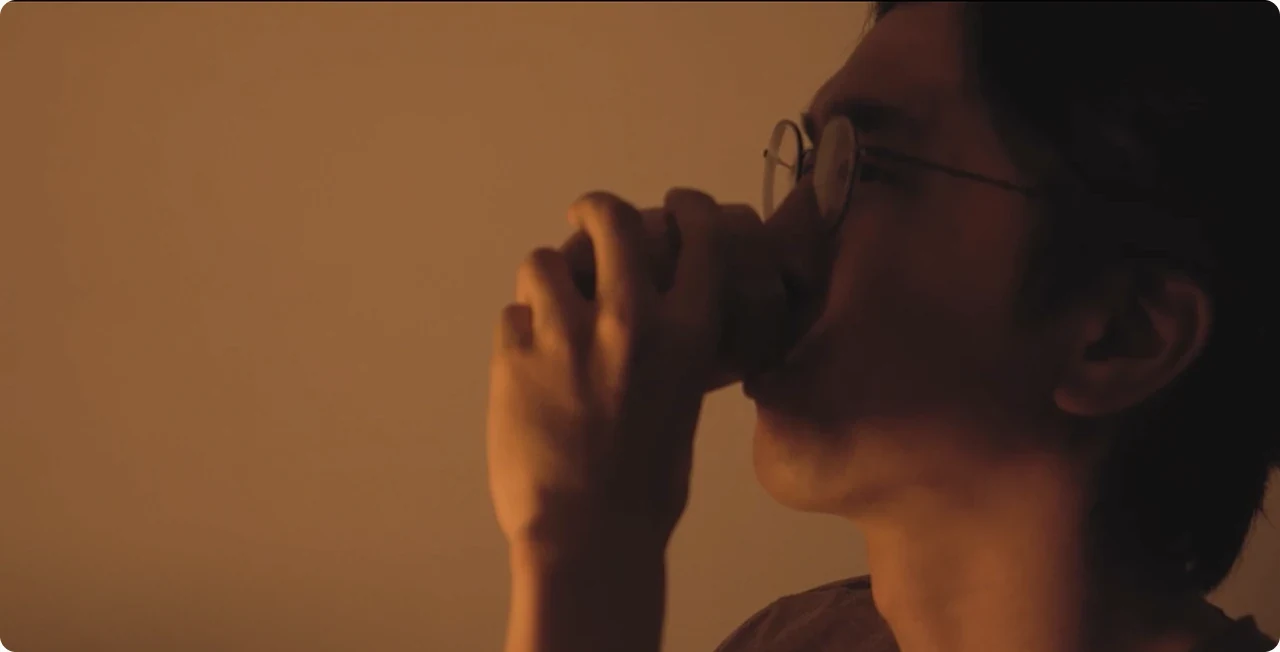
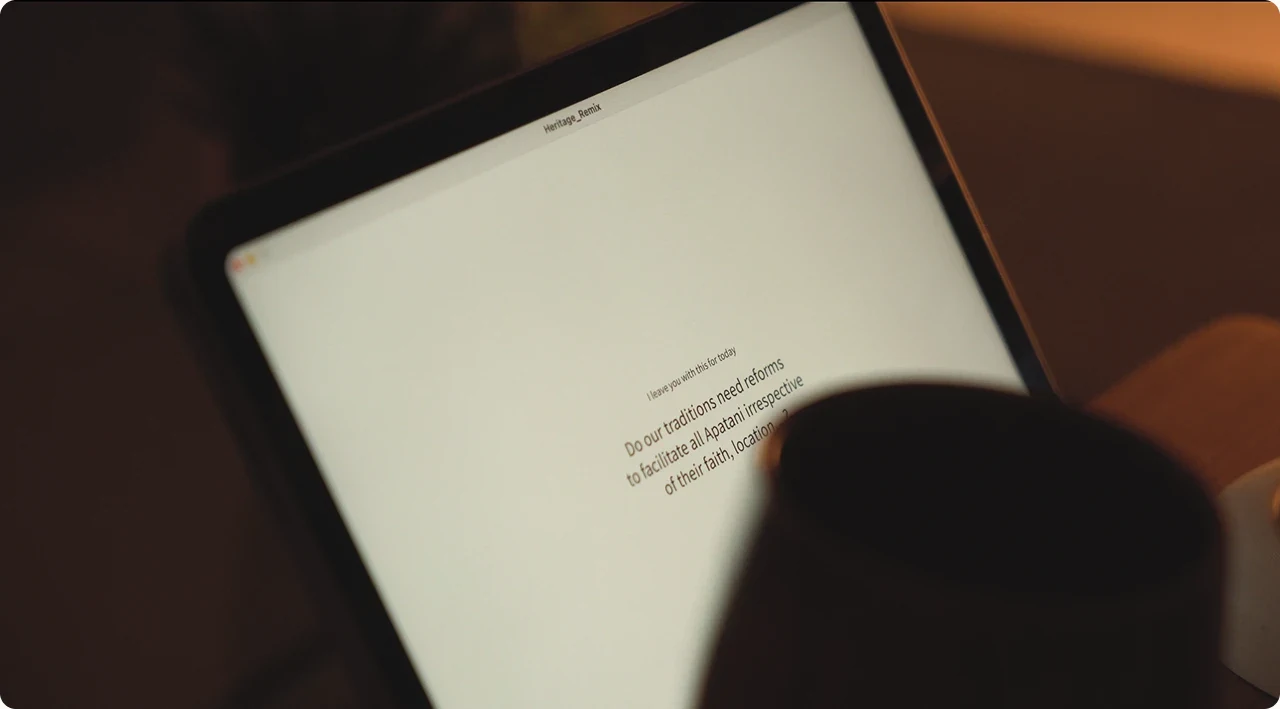
A closing question invites discussion. The question changes every time, and so does the story.
The process
Three things fading together
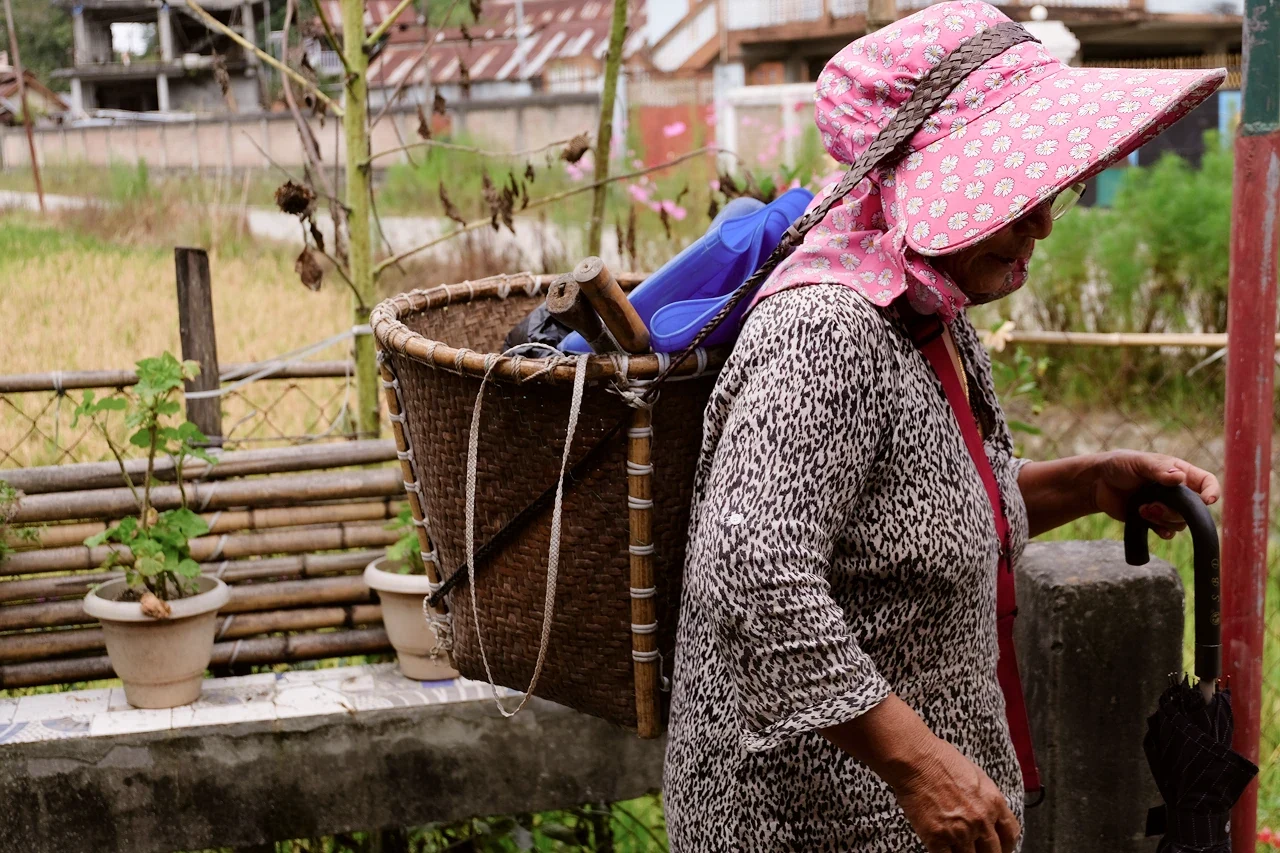
Interviews with people from my community showed a weakening link between rituals, artefacts and language. Rituals were performed less and less, which meant fewer occasions to use the artefacts, and the words and phrases spoken in those moments were disappearing too.
I found this connection by talking to people I call everyday community members: those who live in, or have spent a long time in, our hometown.
“Some rituals are no longer important to us since we converted to Christianity, and we’re told not to practise them.”
F (56)
“For the things that we don’t see anymore, we don’t use those words anymore.”
F (42)
“I wish our language wouldn’t die, but I can’t even speak it properly now. I hope we keep using it.”
F (56)
Then I wanted to understand the diaspora, whom I call memory bearers: people with early memories of our grandparents’ way of life. How much do they know, and what’s their relationship to the community now? There was clearly a gap, and talking to them, the project moved toward bringing the three elements, rituals, artefacts and language, back together for the diaspora.
“When Aane Aaba were there we had to communicate with them in Apatani. It was a need… Now since they are no longer there, there’s no need.”
F (28)
“The rituals are our identity. The time we do rituals it becomes a precious moment… but I don’t go to festivals and practise rituals. I don’t know much… I don’t even know our language properly.”
F (29)
“After knowing the pros and cons of Myoko, I started to think it’s not that bad.”
F (36)
Why do some traditions get passed on?
I was struggling to decide which part of heritage to work on. Culture is all around us, so I asked a broader question: why are some traditions passed on while others are forgotten or vanish?
Animals as mentors
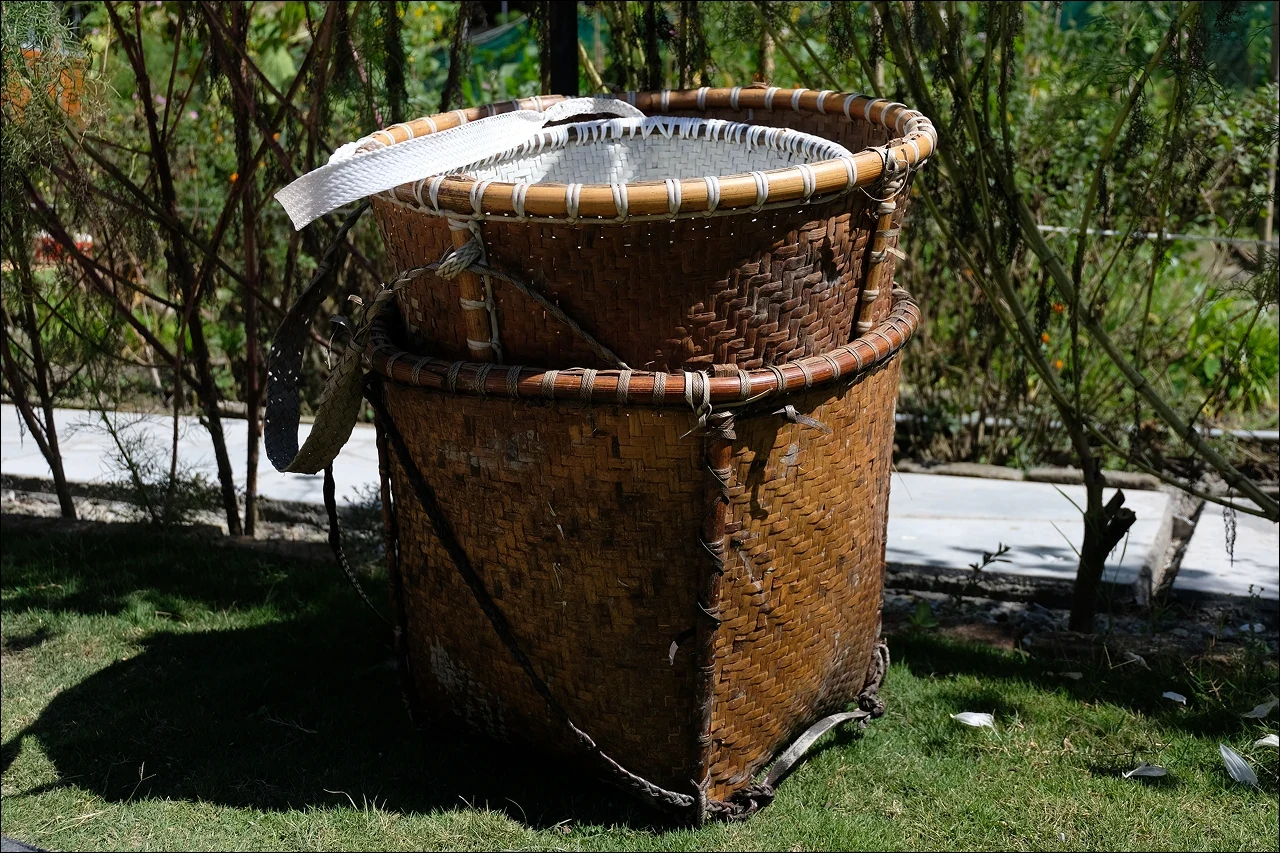
To find an answer, I turned to animals, which my community has a deep relationship with in our cultural and spiritual practices.
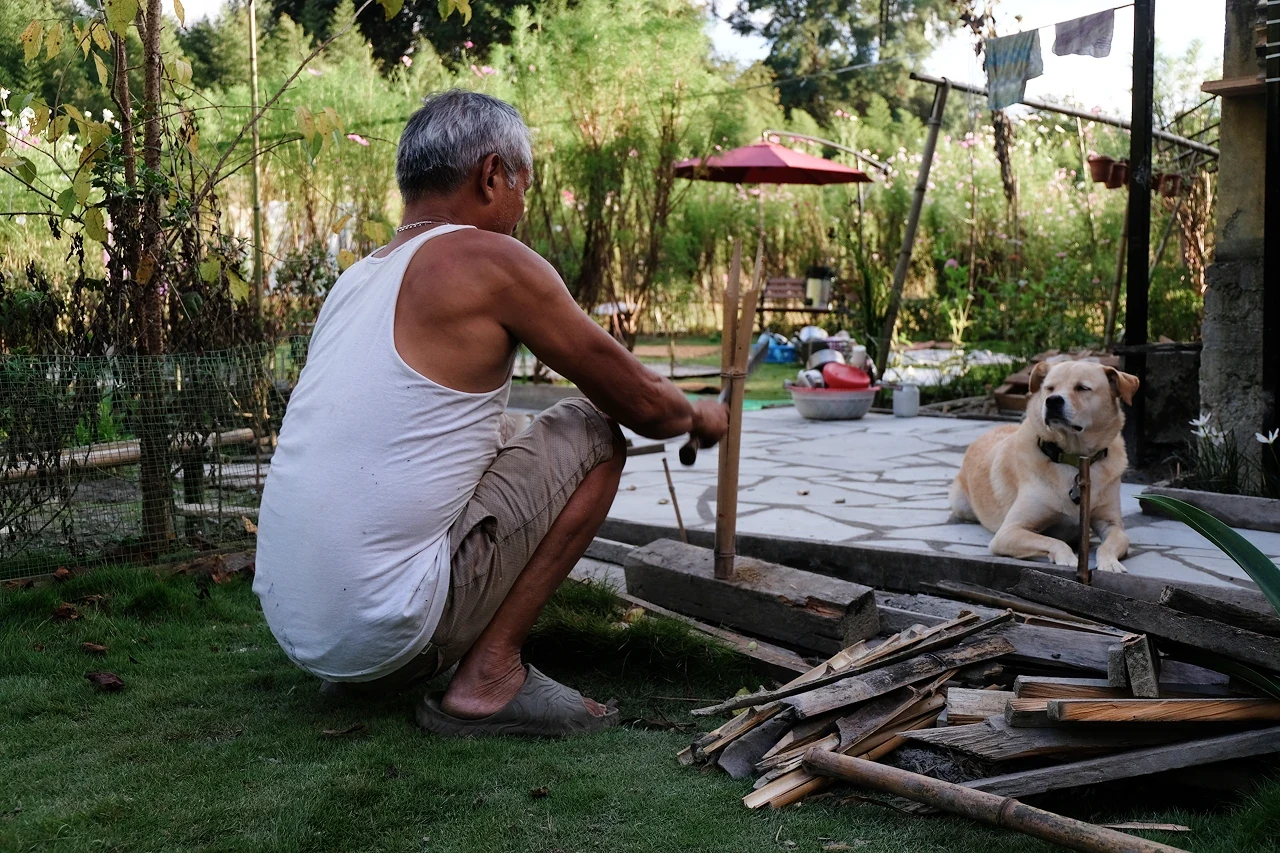
Research on social learning in animals describes several kinds of information that get passed on:
- Perishable (“knowing where”)
- Non-perishable (“knowing that”)
- Skills (“knowing how”)
- Signal variants (local “dialects” of a fixed message)
- Symbols
Of these, the core of tradition is skills and symbols: the behaviours and signs that define a community, and the richest in meaning when we preserve or adapt them. In my community, both were disappearing. So I went back to the same thought: culture is all around us, so what can we learn from it?
Challenges around culture are universal
The specific context of a culture may differ, but the underlying issues are often the same. So I reached out to another group of interviewees, practitioners: hands-on keepers of traditions from different parts of the world. After talking to them, I found the common thread that keeps their crafts alive: master the “how” and embrace the “why”.
(Practitioners)
Master the “how”.
Embrace the “why”.
“There are so many difficult and complicated rules but each rule has very, very rational meaning. The more you learn, the more interesting.”
Japanese tea ceremony master
“This is the legacy what I am carrying forward… handloom generates employment… We should protect and go for the handloom.”
Himroo weaver
“…Hong Kong’s history does not just limited to when the British were here. We had a lot of native history before they came… so I wanted to bring out who these people were.”
Hong Kong urban storyteller
Co-creating, with the people, for the people
Cultural nuance mattered, and so did the risk of misappropriation. Being from the community doesn’t mean I can change things however I want. A major struggle was how to balance religion, since many of our rituals are tied to animist and sacrificial practices.
So I brainstormed with people from my community to find a direction they could relate to. A common theme across the interviews and brainstorming sessions was the festival Myokó, and how people have adapted it despite religious change.
One part of this month-long festival echoed most: Ajin Buñn, where you invite ancestral friends, made through your parents and their parents, offer drink and food, and forgive old grievances for a fresh start.
“Ajin Buñn connects the entire circuit of Ziro. Ancestral friends are all across Ziro. It’s the most sustainable way of friendship. Ancestral friends are there for the times of calamities.”
Community member
Inspiration from home
I started prototyping from artefacts used in the festival back at home.
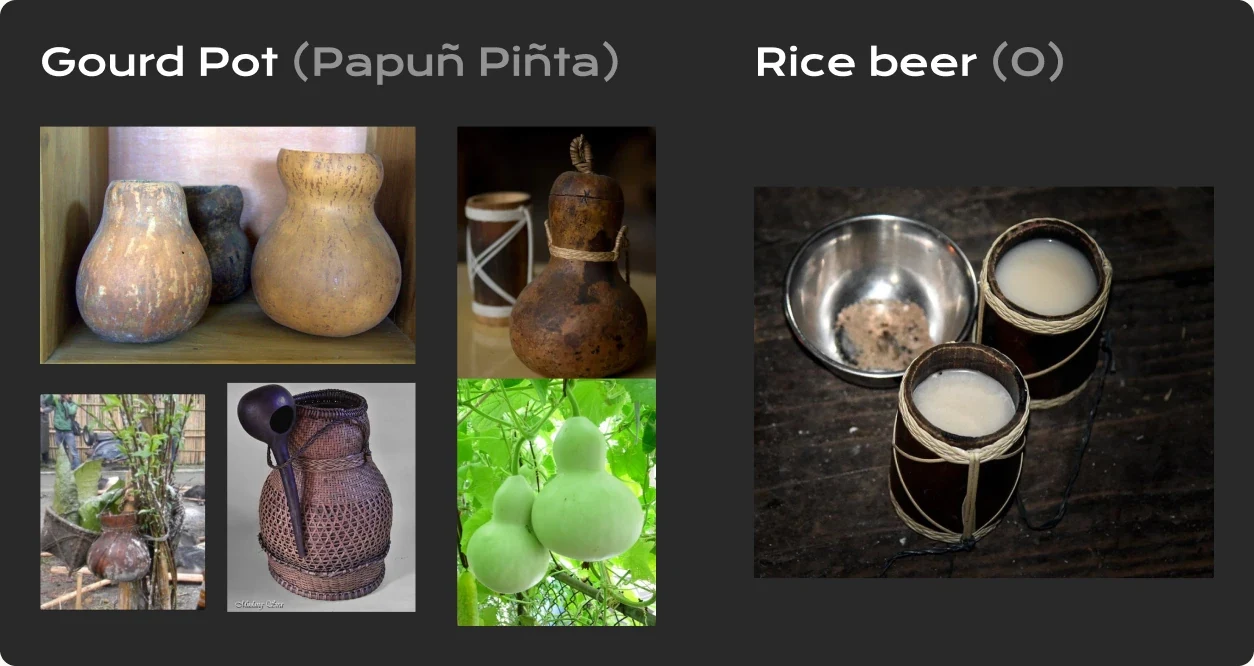
Prototyping
I prototyped around questions like: what level of realism is needed to evoke nostalgia, and what are the key elements? Can a participatory experience make people feel included and involved?
I also explored whether an image alone could spark curiosity and conversation. Which parts of an image spark it? Which senses and roles create the desire to bond?
Could play, making and re-enacting actions without clear guidance spark curiosity to explore?
One question shaped the rest: should it be a remix or a replay? I chose remix, as my way of staying in touch with my roots, and for anyone else who wants to do the same.
Should it be one for all, or all for one?
I was experimenting with form as well: a wearable that turns any object it’s placed on into a ritual object, or a vessel that is itself the artefact.
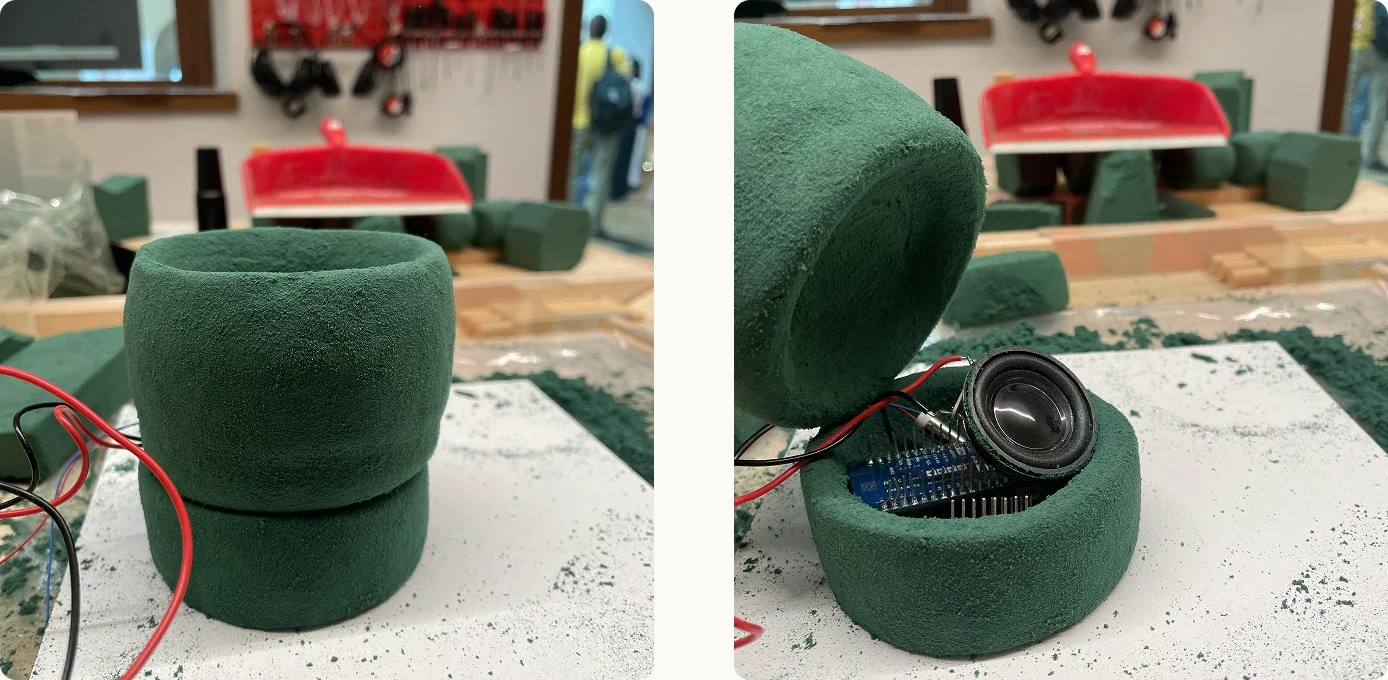
The missing piece
Just when everything seemed to fit, something felt missing. Testing the prototype raised a hard question: “If we think practically, why would someone come back to this again?” Technology would spark curiosity and make a decent one-time experience, but making it part of people’s lives needed something more.
Source of truth to the rescue
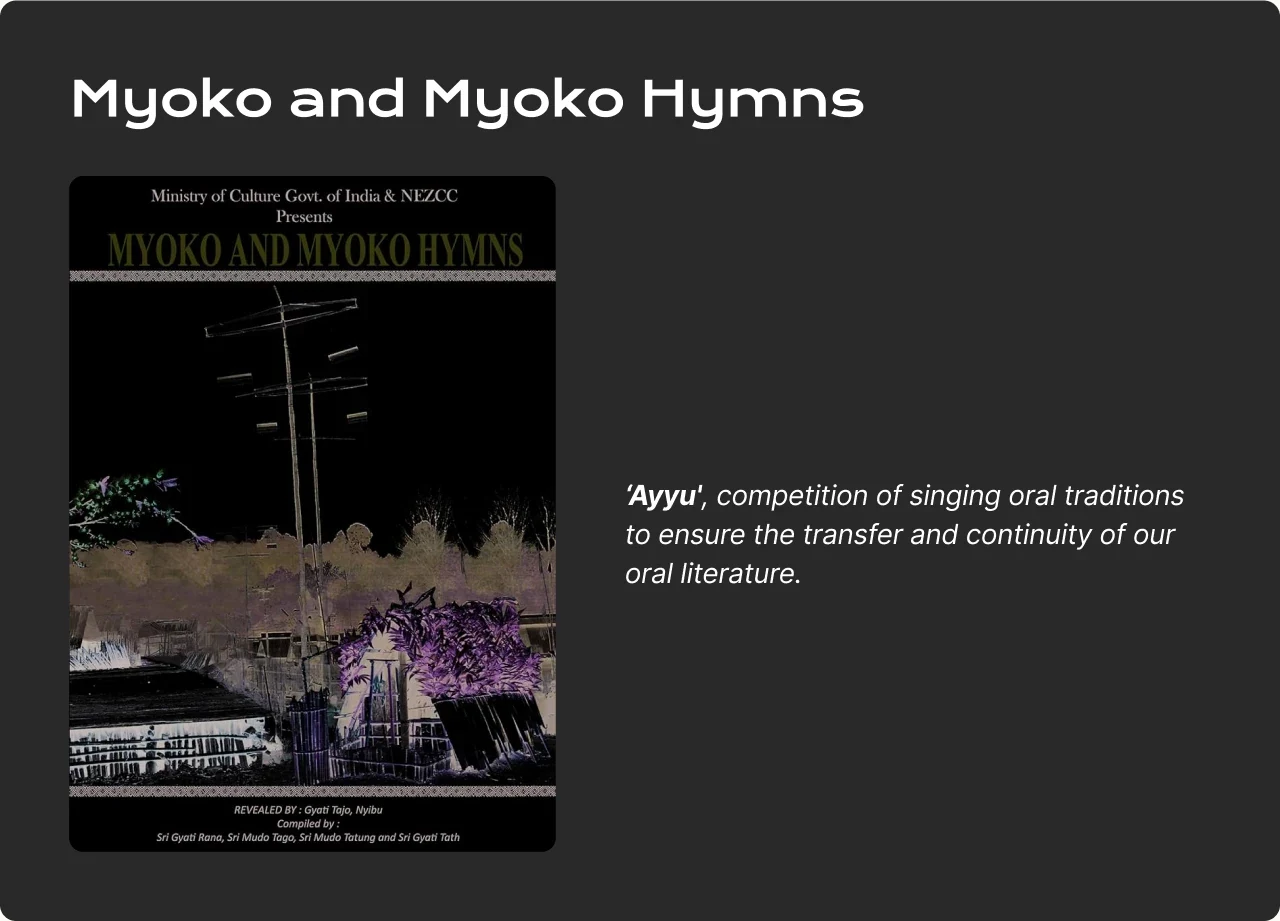
The answer came from the book Myoko and Myoko Hymns, compiled by Gyati Rana and others, which describes Ayyu: a sung competition of oral traditions, held during parts of the festival to ensure our oral literature is passed on. Today it has almost disappeared, and many of us don’t know about it; it’s often replaced by Bollywood songs.
I pivoted from any story to stories of our past, celebrating our origins, along with community gathering and a reflective moment at the end.
Patching things together
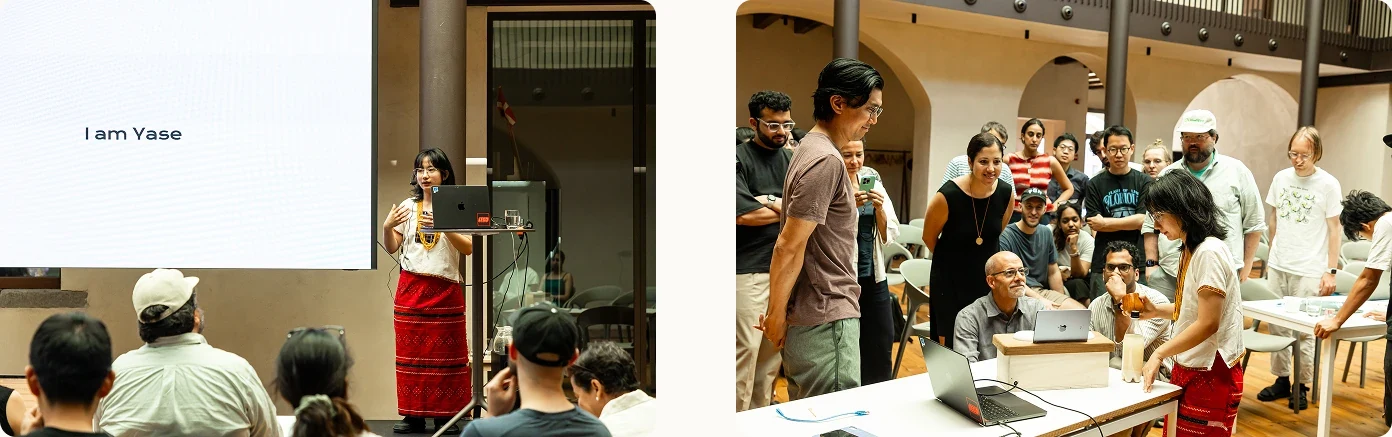
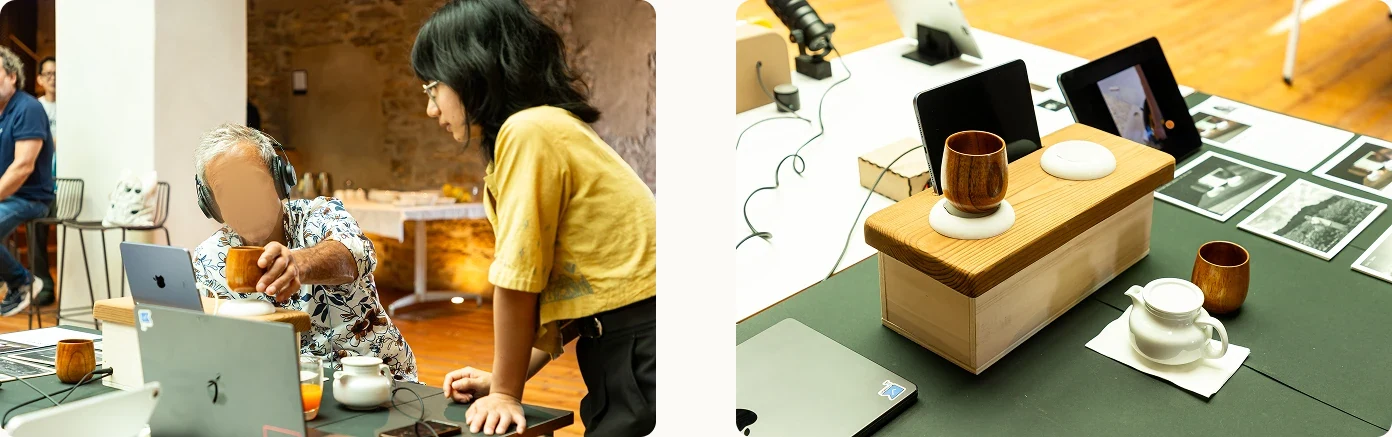
Voices from the community
Words of encouragement
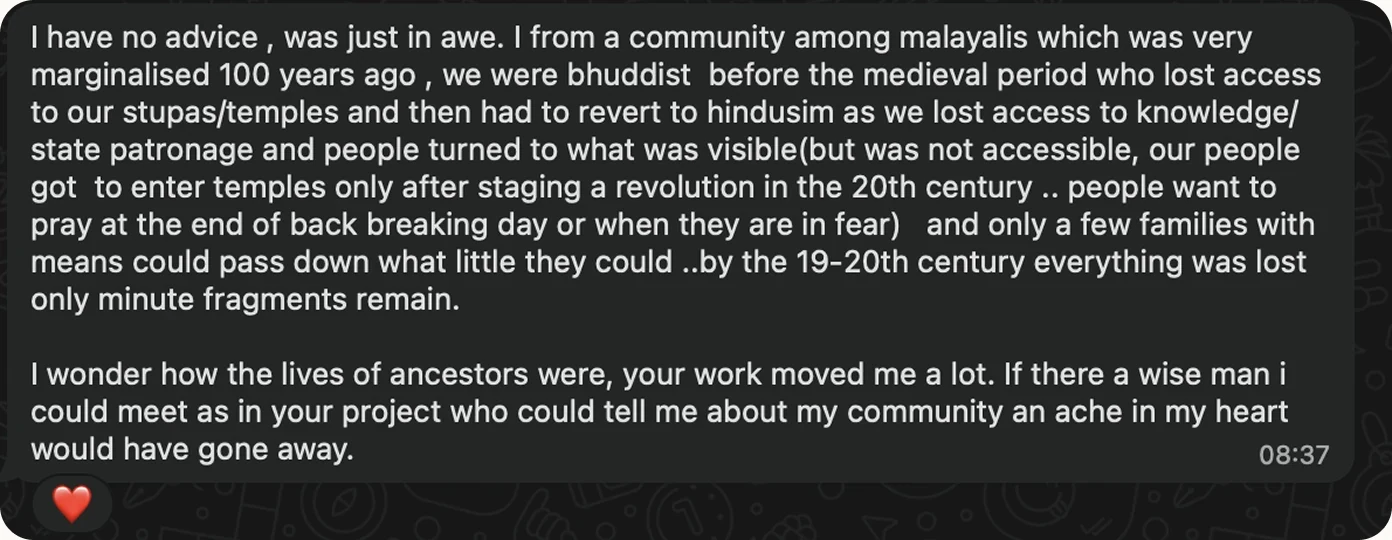
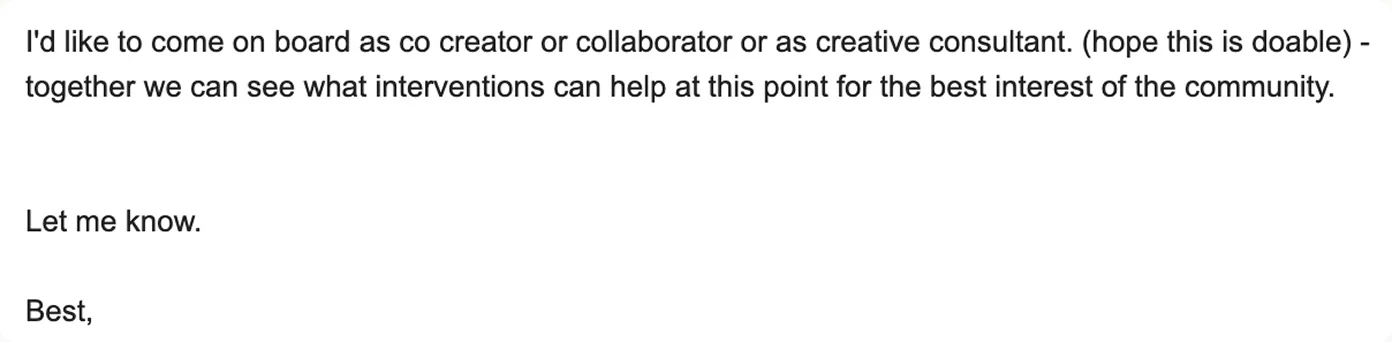
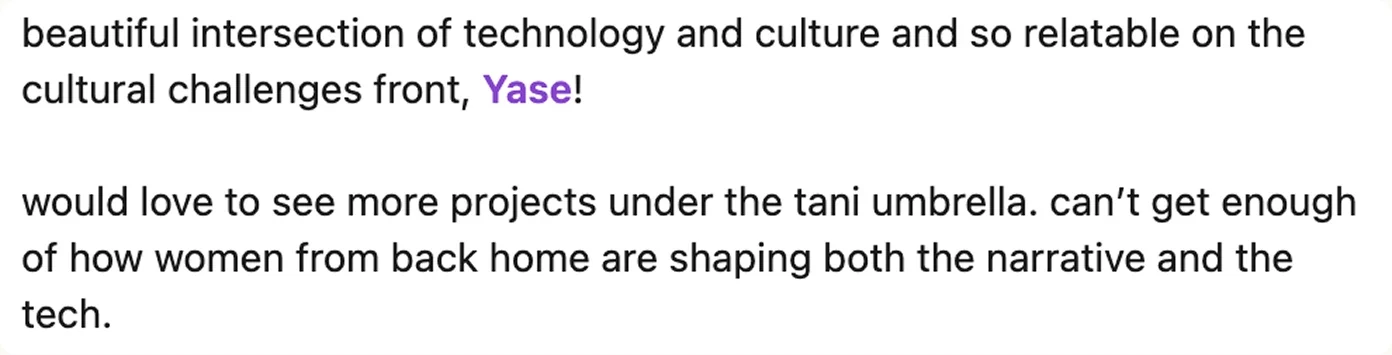
Reflection
I was wrong to assume the younger generation didn’t care. Everyone I spoke to showed concern about the current state of things, and hope for a remedy. The project taught me parts of my own community I hadn’t known; there is meaning in each step of the rituals that I am still taking in. I see it as the start of a longer effort, and a way to start the conversation.
“Knowing culture helps us know ourselves.”
— Paul Bennett